Setting deposit limits and dealing with Source of Wealth (SOW) requests are the two areas that most often trip up Canadian players at offshore or internationally licensed sites like Mummys Gold. This guide explains how those processes work in practice, why regulators require them, and practical steps for mobile users in Canada to prepare and respond without exposing unnecessary personal data. It assumes an intermediate level of comfort with mobile banking and verification workflows and focuses on the trade-offs between quick access to funds and regulatory compliance.
Deposit limits exist for two reasons: player protection and anti-money-laundering (AML) control. Regulators such as the Malta Gaming Authority (MGA) and Ontario’s regime require operators to have risk controls and AML checks. In practice this means operators will let you set voluntary limits (daily/weekly/monthly) and also impose temporary or permanent restrictions if activity looks unusual.

SOW checks are part of Know-Your-Customer (KYC) and AML workflows. For larger depositors or when deposits and wins diverge sharply from a player’s profile, Mummys Gold commonly asks for documentary evidence of where funds came from — typically bank statements with salary entries, payslips, or proof of asset sale or inheritance. Canadian players should expect these requests most often when single deposits or aggregated inflows exceed standard thresholds set in the operator’s risk rules.
Based on patterns familiar in the industry and reported user experiences, here’s how the workflow usually looks for Canadian mobile players:
These practices are consistent with typical MGA/AML expectations and echo what many Canadian players have been told when they face SOW checks.
| Action | Why it helps |
|---|---|
| Prepare PDFs of recent bank statements | Operators prefer PDFs; mobile banking apps often allow export to PDF. Redact account numbers but keep name and transaction lines visible. |
| Export payslips as PDF | Payslips confirm employment income and are commonly requested to show lawful income. |
| If proceeds are from a sale/inheritance, get formal proof | Sale contracts, settlement statements, or probate paperwork are stronger evidence than screenshots of transfers. |
| Use the operator’s upload tool | Secure portals reduce the risk of documents being intercepted; follow file-size/format rules exactly. |
| Keep a local copy of every submitted file | For follow-up and dispute resolution—important if you need to escalate later. |
| Check deposit method limits in CAD | Interac and iDebit have per-transaction and weekly caps; exceeding those often triggers manual review. |
Speed: If you want fast withdrawals and minimal friction, keep deposits moderate and use well-known CAD-friendly methods (Interac e-Transfer, iDebit, Instadebit, debit cards where accepted). Large deposits are statistically more likely to trigger SOW checks and manual review, which slows cashout.
Privacy: Operators must collect proof of funds. The recommended compromise is redaction — hide account numbers and other unrelated data while leaving names, dates and amounts visible. Submitting a clean, well-formatted PDF reduces back-and-forth with support.
Outcome uncertainty: There’s no guaranteed delay timeline for SOW reviews because manual checks depend on the operator’s workload and the complexity of the documents provided. If your documentation is incomplete, expect repeated requests and longer hold times on withdrawals.
Regulatory frameworks in Canada and the operator’s licensing jurisdiction shape these workflows. Operators subject to robust AML rules — those under MGA oversight and those complying with Ontario’s requirements — must implement KYC and SOW processes to a higher standard than purely unregulated operators. For players in Ontario, regulated local processes may be stricter and include provincial reporting. For the rest of Canada, offshore operators still perform AML checks to comply with their licensing obligations and global banking partners.
That means Canadian players should expect consistent KYC enforcement regardless of whether they use the Ontario-specific regulated portal or the international domain. Preparation and clear documentation are what reduce friction.
Watch for changes in provincial regulation or banking policy that affect payment rails (for example, further restrictions on card use for gambling). If those policies shift, operators will adjust their thresholds and required paperwork — possibly tightening SOW triggers for certain deposit methods. Any forward-looking note here is conditional: monitor official regulator pages or the operator’s verification FAQ for specific limit changes.
A: There is no universal threshold publicly published; triggers depend on aggregate activity, deposit method, and how your deposits compare to your account profile. Practically, very large single deposits or several large deposits in a short window make SOW requests more likely.
A: You can refuse, but the operator may freeze withdrawals or limit account functions until compliance is satisfied. Refusal does not remove any holds already placed on funds tied to suspicious activity.
A: Yes, if uploaded through the casino’s secure KYC portal. Export your statement as a passwordless PDF and redact sensitive lines before upload. Avoid sending documents through open email unless the operator explicitly instructs you to do so.
If you want a focused review of how Mummys Gold serves Canadian players — including CAD banking and payout performance — see our broader assessment at mummys-gold-review-canada.
Connor Murphy — senior analyst and gambling writer focusing on Canadian mobile players. I write operational guides so players understand verification, banking, and regulatory trade-offs without the marketing gloss.
Sources: Industry-standard AML/KYC practice and typical player-reported workflows. No proprietary internal documents were available; specifics of thresholds and timelines depend on operator policy and are not publicly published in detail.
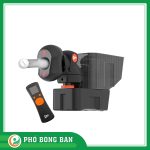 Máy Nova S ProMáy chất lượng tốt
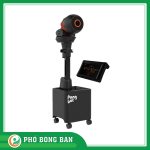 Máy Pong Bot Halo ProQuá đỉnh
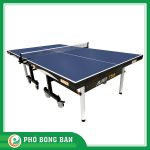 Bàn bóng bàn Gofes Aladin T28sBàn đẹp giá tốt
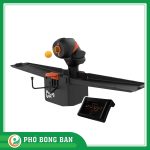 Máy PongBot Omni S Pro0869319517
 Máy Y&T A9 Pro
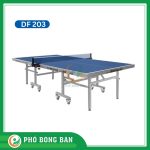 Bàn bóng bàn Song Ngư 203M
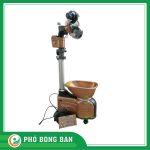 Máy Oukei Q7S
 Giày Asic Attack Bladelyte 4 M4
 Bàn bóng bàn DHS Gold Rainbow
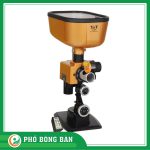 Máy Y&T V-981
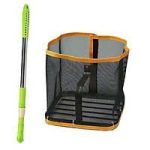 Dụng cụ nhặt bóng
 Giày Butterfly Lezoline 13 M2








Leave a Reply